
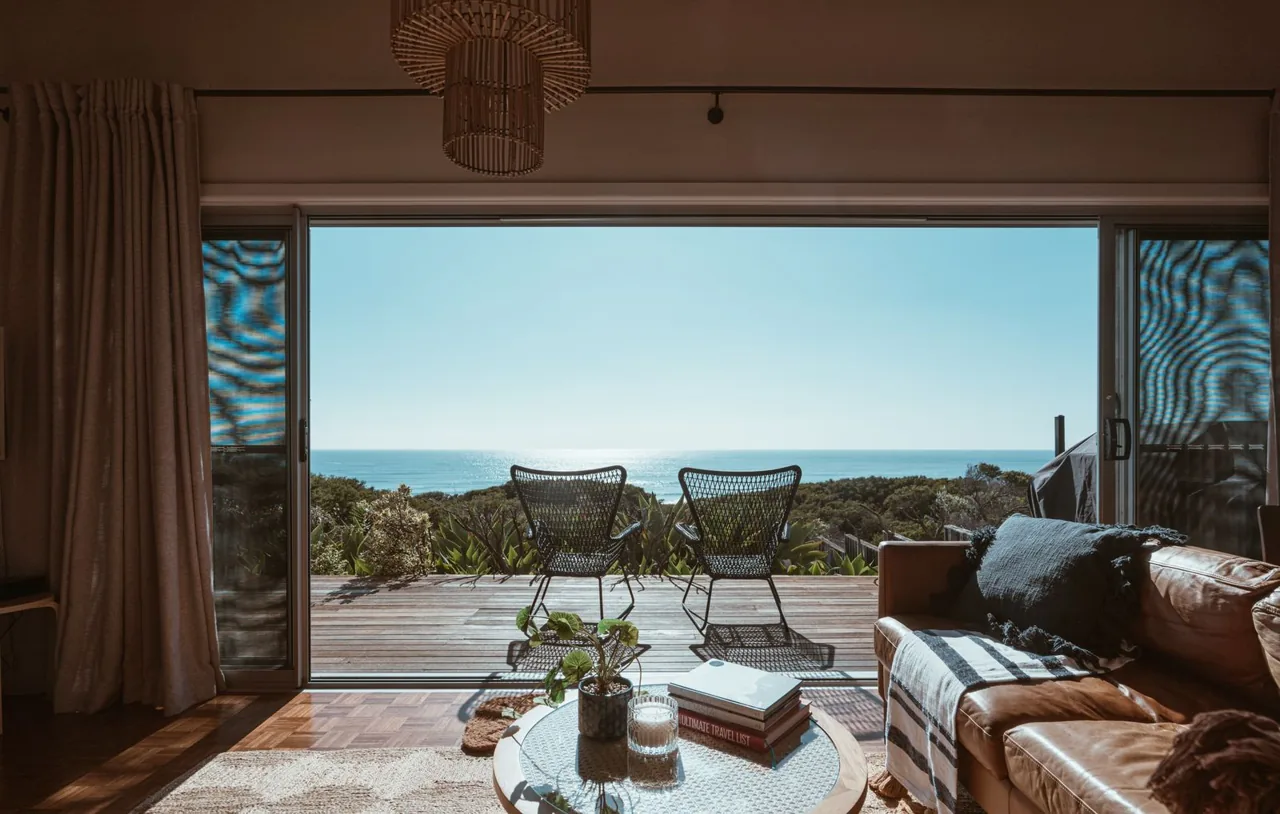
Ask any long-distance sailor what they daydream about during a rough night watch, and a surprising number will say the same thing: a proper house by the sea. Not instead of the boat — alongside it. A base with a solid roof, a real kitchen and a view of the water they can wake to without checking the anchor. Luxury coastal living has become the natural second act for people who love the ocean but no longer want to live on it full-time.
The pull of a fixed horizon
There's a particular calm to owning a stretch of shoreline. The sea still sets the rhythm of the day — the light, the tides, the weather rolling in — but you experience it from stable ground. You can keep a tender on a mooring below the house, sail when the mood strikes, and return to a bed that doesn't move. For many former liveaboards, that balance is the whole point.
What actually makes a coastal home work
Photogenic and liveable are not the same thing. A glass box perched on a cliff looks magnificent in a listing but can be brutal to run — salt corrodes everything, big windows bake in the afternoon sun, and remote plots mean long waits for tradespeople. The homes that endure are built for their climate: deep shading, natural cross-ventilation, marine-grade fittings, and materials that mellow rather than deteriorate in the salt air.
Slow luxury, not loud luxury
The most desirable coastal properties today lean quiet rather than showy. As the editors at Robb Report have noted across the high-end market, buyers increasingly prize privacy, provenance and craftsmanship over sheer square footage. A weathered timber deck, a lap pool that reads as part of the landscape, an outdoor shower under a frangipani tree — these small, well-made details do more for daily life than any amount of marble.
The villa as a stepping stone
Not everyone is ready to buy, and they don't need to be. Renting a staffed coastal villa for a season is the sensible way to test a location before committing — to learn how a place feels in the wet months as well as the dry, and whether the romance survives contact with reality. Many owners we know started exactly this way: a long villa stay between charters that quietly turned into a search for something permanent.
Keeping the boat in the picture
The happiest coastal homeowners never fully swallow the anchor. They keep a boat — often a smaller, simpler one than they used to cruise — precisely so the option to slip the lines is always there. The house gives them roots; the boat keeps the horizon open. It turns out you really can have both, and the people who manage it tend to be among the most contented on any waterfront.